
How astrology can cultivate personal well-being
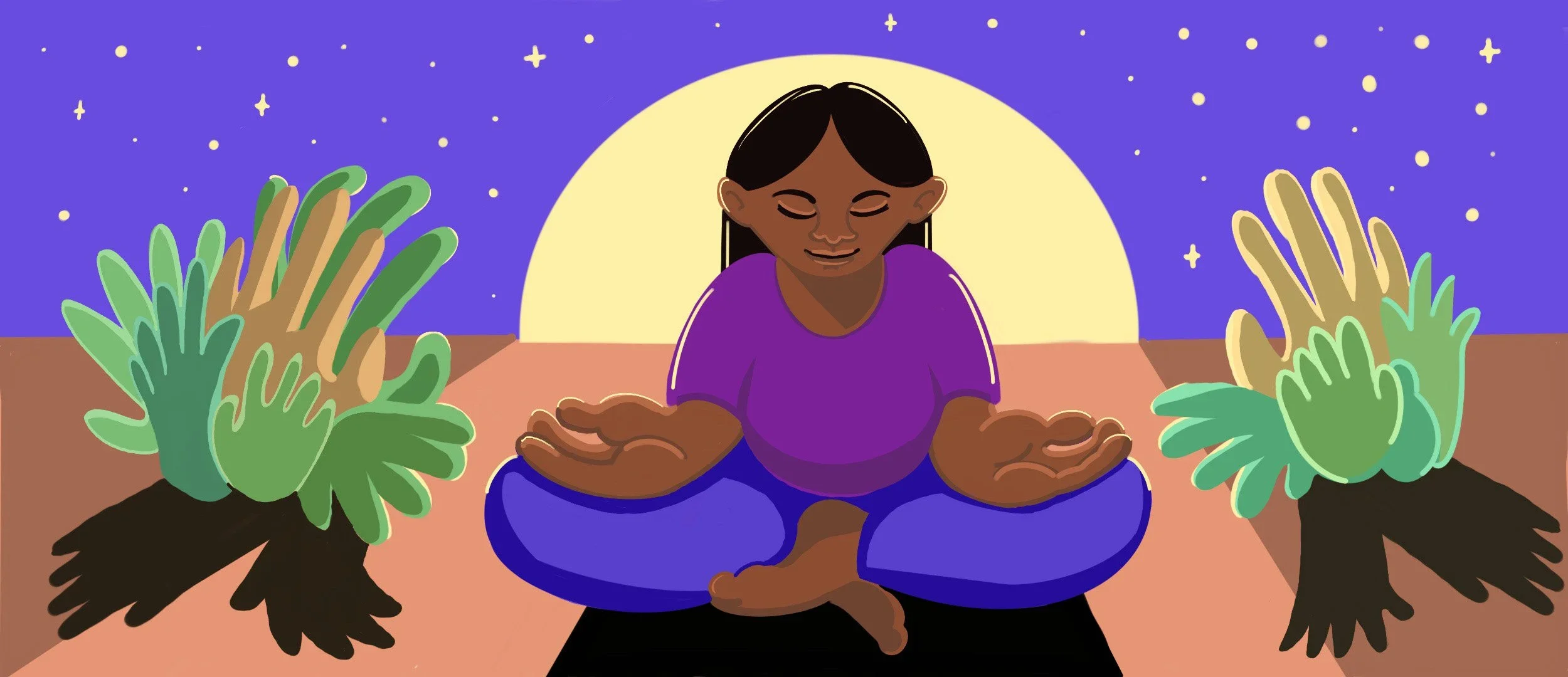
Illustration by Indigo Rael
By Summer Tao
Astrological practices have seen a resurgence this century. The people who partake range in seriousness from giggling at horoscopes to ardent followers of the night skies. Whether we're into it or not, references to signs and stars are part of modern life. They may be the butt of endless jokes (even among adherents), but there's surely something valuable there for so many people to take part in it.
Looking to the skies in awe for meaning and patterns is a universal experience. Hindu and Babylonian astrological traditions are some of the oldest ones documented, but any society that wrote down what they saw in the skies has left an astrological record. Astrology is also inextricably linked to early scientific traditions. Our fascination with the stars spurred the desire to measure and understand them, driving early discovery. Although contemporary methods have supplanted the once scientific role of astrology, it's far from a meritless pursuit for people in search of meaning.
Registered Clinical Counsellor Niloufar Esmaeilpour said that its appeal lies in the "structure and guidance that can be gleaned from astrology — especially in confusing and uncertain times. In essence, astrology gives parameters of understanding oneself and one's relationships, replacing to a large extent more traditional structures of meaning and support."
That's a leading appeal of astrology to modern audiences: It's a personalized path to structure and understanding when other routes aren't preferable. More practically, people are drawn to spirituality and community in times of strain. Social Worker Jenny Flora Wells pointed out that, "Post COVID-19, many people are craving connection and community that was lost during the pandemic. Humans are communal beings and we thrive in community. "
This need for belonging and stability is reflected in a 2021 study that found higher consumption of astrological content during the pandemic. For better or worse, we're not rational, unbiased creatures. We all falter when placed under enough strain. The question is whether the sources of comfort we then seek can be turned to good.
In the right setting, astrology is a point of mutuality. Nilou said that, "Talking about astrological signs and readings would break the ice with a conversation that induces shared experiences." And, "Group activities leading to such astrological discussions or events create a collaborative environment in which people feel understood and supported."
That explains why I used to sneer at astrology. To my outsider's eyes, the conversations about people's signs didn't seem to go anywhere. With time, I've come to realize that it's hardly my business if nobody is harmed. Believers are bonding and enjoying themselves, and just because I personally don't grasp the meaning doesn't make it the same for them.
I still don't practice astrology, but seeing its friendship-forming effect on others reminds me of my encounters with another controversial topic: faith-based addiction recovery programs.
When I learned about their popularity while doing Master's research, my first response was to balk. Gentle exposure to the people who benefited from faith-based counseling showed me that although I disagree with its approach, the people who benefit from them still find it helpful. The otherness that permeates practices we don't understand won't always change its effectiveness, as one study on Alcoholics Anonymous found.
Astrology, religion, and spirituality draw their strengths from that same font: personalized guidance. There's safety and comfort in quiet, consequence-free reflection. This may explain the growing interest in spirituality in lieu of organized religion among young people.
Jenny said that astrology "resonates with individuals who might have had traumatic experiences with organized religion or traditional practices. Astrology is more open-ended and can be tailored to what works best for a specific person. There is no judgment, obligation, or shame attached, and is similar to meditation and yoga in that it is a personal practice."
Although foreign to those of us on the outside, astrology can be a coping mechanism and source of comfort. It's a way to prompt personal reflection in stressful times and make like-minded friends. Nilou said that, "Ritual, personal or in the context of religious ceremony offers another structure in the people's lives. [Astrology] also most commonly does not require any formal membership or strict belief system, hence leaving room for personal interpretation and flexibility."
The almost paradoxical mechanism of astrology is key to recognizing its value. It's structured enough to guide, but wide open to interpretation. There's a commentary about our shared humanity there.
My background may be in statistics and sciences, but I can't hypothesis test my way through life. Only the smallest part of my day is measurable. Most of my decisions are based on best guesses and feelings. That's the basic standard by which we live, so why not seek out the structure and flair we need to keep our lives going?
Summer Tao has a Masters in Psychology and is currently pursuing a PhD focused on LGBTQ+ healthcare in South Africa. Summer’s writing often covers topics including queer relationships, sexual health, tabletop gaming, and humor.
your contribution is tax-deductible
KEEP EXPLORING: